Light Guide Panels vs. Traditional LED Panels: Which Is Right for Your Project?
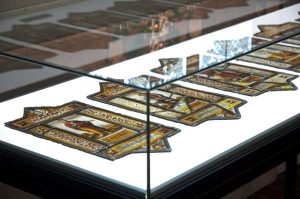
When planning lighting for retail displays, architectural features, or custom fixtures, it’s easy to assume that all LED panels are created equal. But that assumption can lead to disappointing results.
Two commonly compared options—light guide panels (LGPs) and traditional LED panel lights—serve different purposes. Understanding those differences is key to choosing the right solution for your project.
Let’s break it down.
What Is a Light Guide Panel?
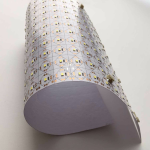
A light guide panel (LGP) is a thin, engineered acrylic panel that uses edge-mounted LEDs and a laser-etched pattern to evenly distribute light across its surface.
Instead of placing LEDs behind the panel, light is introduced at the edges and guided across the surface, creating:
- Ultra-uniform illumination
- Minimal hotspots or shadows
- A slim, low-profile design
- Highly customizable shapes and sizes
These panels are often used in retail displays, shelving, signage, and architectural features where uniform, even lighting is essential.
What Is a Traditional LED Panel Light?
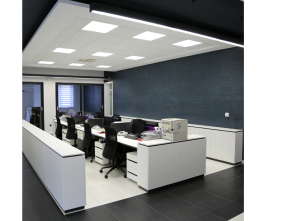
A traditional LED panel is typically a self-contained fixture designed for general illumination—most commonly installed in ceilings.
These panels usually include:
- A backlit array of LED strips
- A diffuser to soften the light output
- A fixed size and shape (e.g., 2’x2’, 2’x4’)
They are ideal for ambient lighting in offices, schools, and commercial spaces, but they’re not designed for custom display applications.
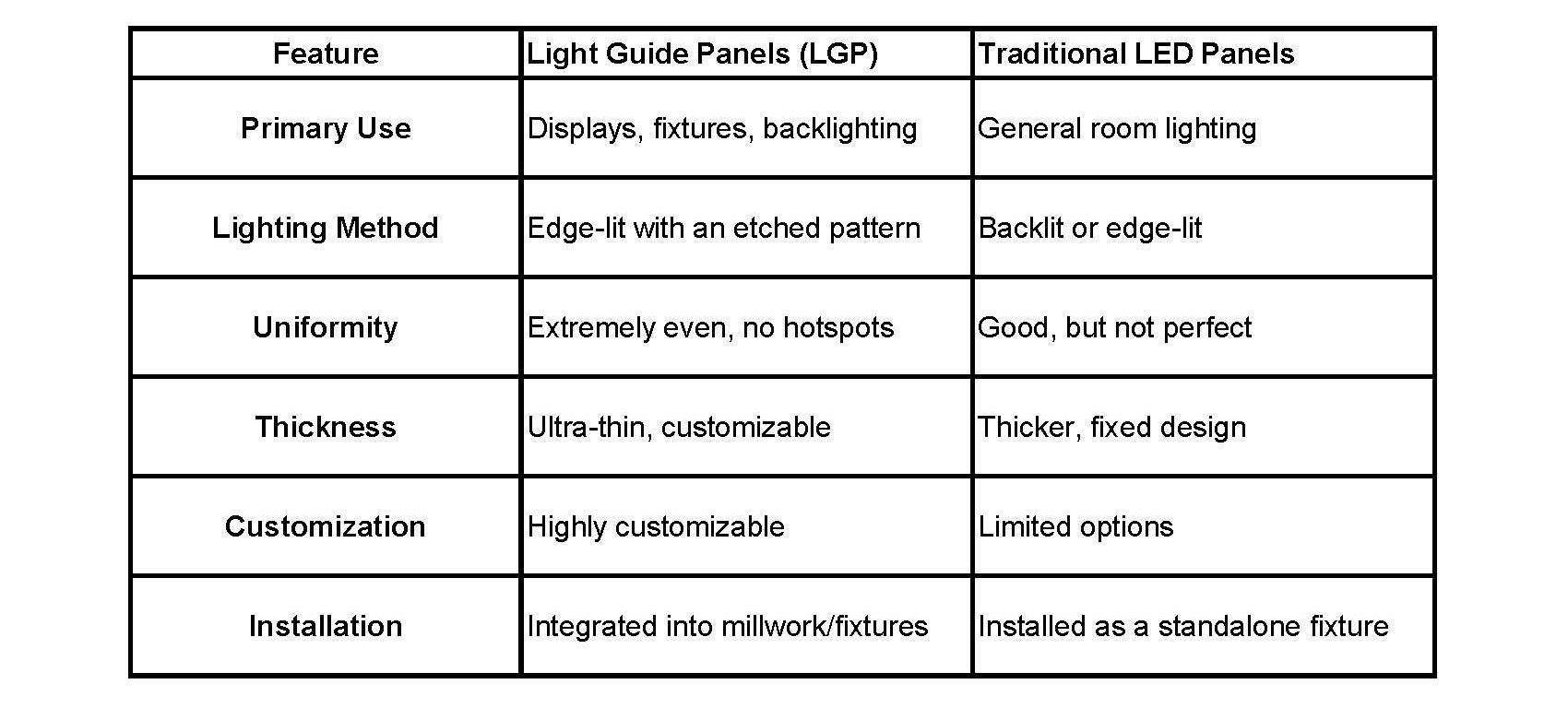
Key Differences at a Glance
When to Choose a Light Guide Panel 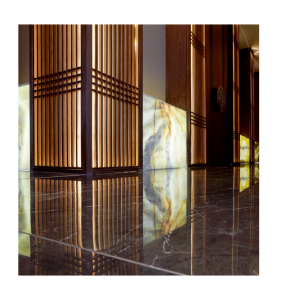
Choose an LGP (light guide panel) if your project requires:
- Uniform backlighting for graphics or materials (acrylic, stone, fabric)
- A sleek, modern look with minimal thickness
- Custom shapes, sizes, or cutouts
- Integration with cabinetry, displays, or shelving
- High-end visual presentation without visible hotspots
When a Traditional LED Panel Makes More Sense
A standard LED panel is the better choice when you need:
- General ambient lighting for a space
- Quick, cost-effective installation
- Standardized sizes for drop ceilings
- Broad, functional illumination rather than visual impact
Common Mistakes to Avoid
One of the most common missteps is using a standard LED panel for display lighting.
While it may seem like a cost-saving move, it often leads to:
- Uneven lighting
- Visible hotspots
- Bulky installations that disrupt the design
If your goal is a polished, high-end display, a light guide panel is the right tool for the job.
Cost vs. Value: What Should You Consider?
LGPs (Light guide panels) are typically more specialized and custom, which can mean a higher upfront investment. However, they often deliver greater value through:
- Enhanced visual appeal
- Improved product presentation
- Long-term durability
- Reduced need for redesign or retrofitting
In contrast, traditional LED panels are budget-friendly for large-scale lighting but lack the flexibility needed for custom applications.
The Bottom Line
Choosing between a light guide panel and a traditional LED panel boils down to one question:
Are you lighting a space—or enhancing a display?
- If you’re lighting a room, choose a traditional LED panel.
- If you’re lighting a feature, product, or experience, a light guide panel is the better investment.
Ready to Find the Right Solution?
At Specialty Lighting, we help designers, engineers, and retailers create custom lighting solutions that elevate their projects.
Whether you need a standard solution or a fully customized light guide panel, our team can help you determine the best fit.